
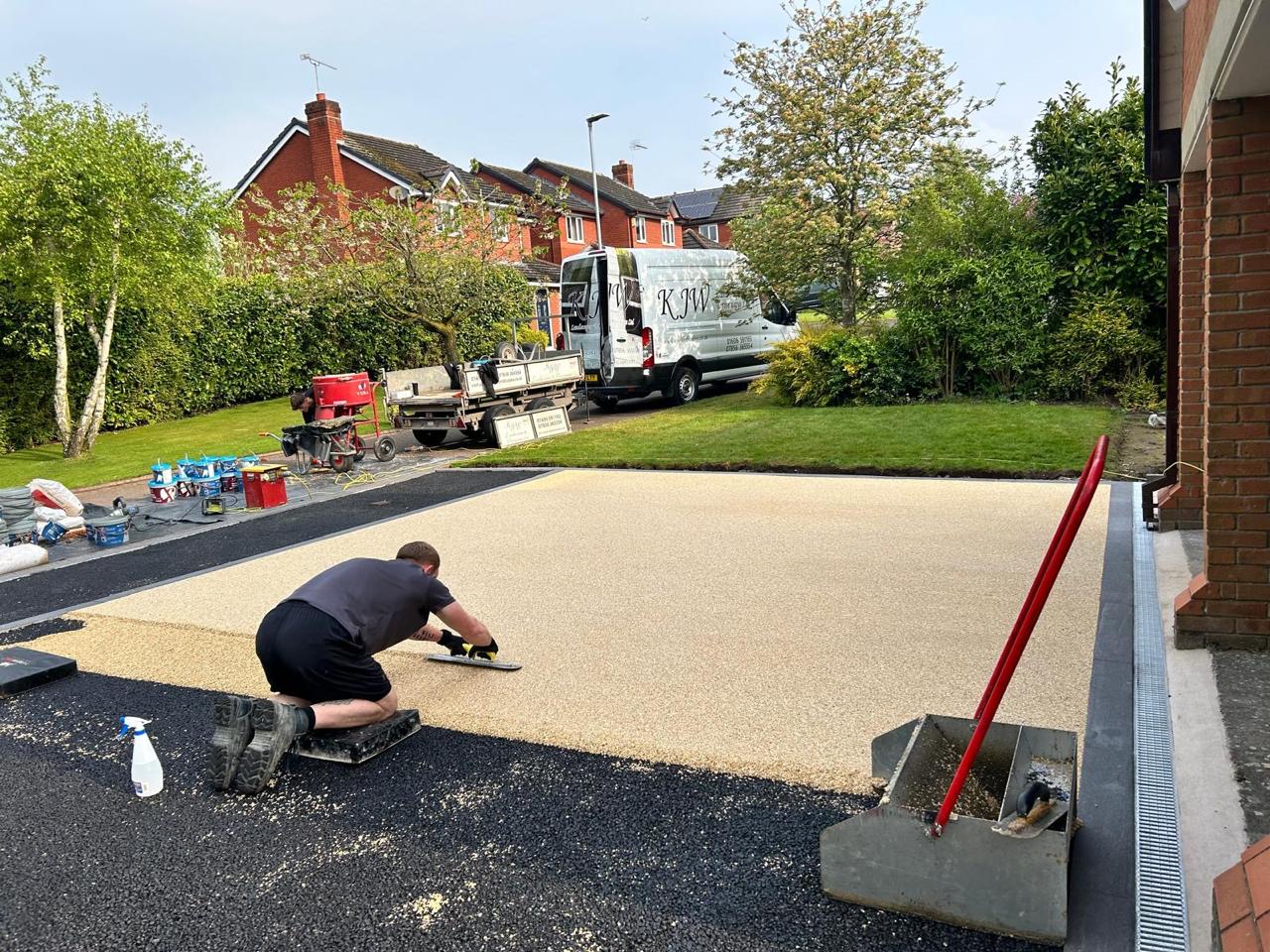
Advantages and Disadvantages of Resin Driveways
Resin driveways are a popular choice for homes across the UK. They create a smooth finish, come in many colours and can suit both modern and traditional properties.
However, resin is not right for every driveway. It has many useful benefits, but there are also some limits to consider.
This guide explains the main pros and cons of resin driveways. It also covers other surfaces that may suit your home if resin does not meet your needs.
What Is a Resin Driveway?
A resin driveway is made using resin and small pieces of natural stone. The material is laid over a prepared base to form a firm surface.
There are two main types:
- Resin bound: The resin and stone are mixed before being laid. This creates a smooth surface that can allow water to drain through.
- Resin bonded: Resin is spread over the base before loose stone is added. This creates a rougher finish with more exposed gravel.
The look, drainage and care needs will depend on the system used.
Advantages of Resin Driveways
Smooth and attractive finish
Resin creates a neat surface without the large joints found in some types of paving. It can give a driveway a clean and modern appearance.
There are many stone colours and blends to choose from. This makes it easier to match the drive with your house, garden walls or paths. Contrasting stone can also be used to add borders and other details.
Low maintenance
A resin driveway does not need a large amount of regular care. Sweeping away leaves, soil and loose dirt will help keep it clear.
You can also wash the surface from time to time to remove light marks. Oil and other spills should be cleaned quickly, as they may stain the stone.
Good drainage
A correctly installed resin bound driveway can allow rainwater to pass through the surface. This helps reduce standing water and puddles.
However, the base must also be suitable. The driveway levels, nearby drains and ground conditions should all be checked before installation.
Firm and easy to use
Unlike loose gravel, resin creates a firm surface without stones spreading onto nearby paths or roads.
A smooth and level driveway can also be easier to use with wheelchairs, pushchairs, bins and bicycles. The final result will depend on the slope and quality of the installation.
Strong when installed correctly
Resin can provide a long-lasting surface when it is laid over a sound base. Good groundwork helps prevent movement, cracking and sinking.
The resin must also be laid at the correct depth and in suitable weather. Poor preparation can reduce the life of the driveway.
Disadvantages of Resin Driveways
It can cost more than other surfaces
A resin driveway may cost more than gravel, tarmac or standard block paving. The price will depend on the driveway size, stone blend and amount of groundwork required.
KJW resin driveway prices usually start from around £180 per m². Standard block paving starts from around £110 per m².
Excavation, edging, steps and drainage can increase the final cost.
Repairs may remain visible
Small areas of resin can often be repaired. However, the new section may not match the original surface.
Stone colours can vary between batches. Older resin may also change in colour due to sunlight, weather and daily use.
It needs a stable base
Resin will not hide problems caused by poor groundwork. If the base moves, cracks or sinks, damage may appear in the resin above.
Some existing driveways may provide a suitable base. Others will need to be removed before a new foundation can be installed.
Gravel may be a more flexible choice for rural properties and larger spaces. Ground preparation and edging are still needed, but small changes in the ground may be less noticeable.
Gravel can also be added to or adjusted if the driveway layout changes.
Installation depends on the weather
Rain, moisture and very high or low temperatures can affect how resin bonds and cures. Work may need to be delayed until the conditions improve.
The surface must also remain protected while it sets. A rushed installation may lead to weak or uneven areas.
It may not suit heavy vehicles
A well-built resin driveway should support normal household cars. Heavy vans, motorhomes and commercial vehicles may place more pressure on the surface.
Turning the wheels of a heavy vehicle while it is not moving may also cause stress.
Concrete can provide a strong surface for heavier loads. Tarmac may suit long driveways and larger parking areas. Heavy-duty block paving is another option and allows damaged blocks to be replaced.
Are Resin Driveways Worth It?
A resin driveway can be worth the cost if you want a neat, smooth and low-maintenance surface. It offers plenty of colour choice and can provide good drainage when installed correctly.
However, it may not suit every property or budget. Installation can depend on suitable weather and the surface needs a strong base.
Block paving may be better when easy repairs and design choice are important. Natural stone and granite setts offer more character. Gravel can keep costs lower, while concrete and tarmac may suit heavier use.
KJW Landscapes installs resin, block paving, gravel, natural stone, granite setts, concrete and tarmac driveways across Cheshire. The team can inspect your property and help you compare the best options for your home.